
Quick answer
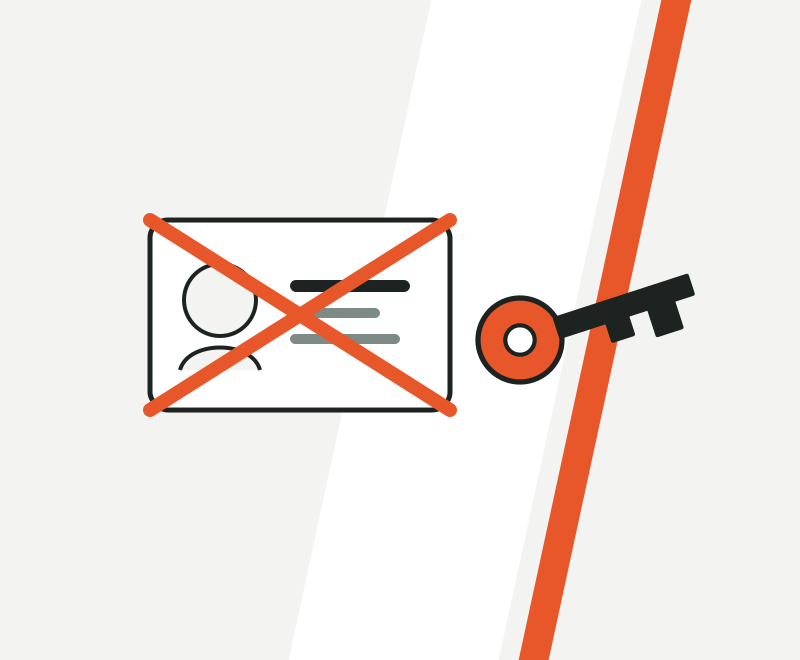
Yes, on some routes and within the law. Exchanges, wallet sell buttons and exchange P2P desks must verify your identity under anti-money-laundering rules, and crypto ATMs ask for ID above limits set by law and the operator. A standard Zilligo order needs a free account but no ID documents, and Bitcoin-only P2P apps such as Bisq ask for none. None of this is anonymous: a person reviews every Zilligo order, records are kept for 5 years, payout providers verify their own customers, and tax rules still apply.
The truth sits in between, and it depends on the route. If you want the full picture first, read how to cash out crypto.
This guide shows where the law requires an ID check and why, which lawful options ask for no ID documents, and what each one really risks.
You'll also see exactly what Zilligo asks for on every order, and what it doesn't.
What is KYC, and why do cashout services ask for it?
KYC is the identity check a financial business runs on its customers, because anti-money-laundering law tells it to.
The duty falls on the business, not on you. In the US, a company that exchanges crypto for money is a money transmitter under FinCEN's rules, with Bank Secrecy Act duties to keep records and report suspicious activity.
A passport, national ID card or driving licence.
A live photo or short video, matched to the ID.
Sometimes a recent bill or bank statement.
Plenty of people prefer to skip it for ordinary reasons. A one-off sale isn't worth a days-long approval, and every stored passport copy is one more thing that can leak.
Where is an ID check required by law?
Wherever a regulated business handles the sale, and the bar keeps rising. Three sets of rules decide most cases.
Exchanges and other crypto businesses must identify customers under each country's money-laundering law.
When providers move crypto between them, sender and receiver details travel with the transfer.
Large cash transactions are reported, whatever the customer is asked.
Amounts that trigger extra checks or reports
- Dec 2024EU travel rule takes effect
Every crypto transfer between EU providers carries both parties' details.
- Jan 2025California caps kiosk charges
No more than $5 or 15%, whichever is greater, on top of a $1,000 daily limit.
- Aug 2025FinCEN warns about kiosks
A US notice on scam payments through crypto ATMs and operators' Bank Secrecy Act duties.
- Nov 2025Paxful closes
The largest P2P marketplace shuts on 1 November.
- Aug 2026NoOnes closes
Its P2P market shuts after EU sanctions.
- Jul 2027EU bans anonymous crypto accounts
Regulated EU providers may no longer keep anonymous accounts or handle privacy coins.
In the UK, crypto ATMs need FCA registration, and the FCA says no operator is registered. Any machine running there is operating illegally.
Which ways to cash out ask for no ID documents, and what do they risk?
A few lawful routes ask for no ID documents. Each one trades the paperwork for a different risk.
| Route | ID check | The real risk |
|---|---|---|
| Zilligo, standard order | None for a standard order; a free account and the payout's details | 7 coins only; large or unusual orders can be held for review |
| Bisq | None; you install the app | Bitcoin only, and new sellers lock a deposit or build a reputation first |
| Hodl Hodl | None; email and password only | Bitcoin only, not in the US and some other countries, and dispute decisions are final |
| Exchange P2P desks (Binance, Bybit, OKX) | Required | Fake or reversed payments, and frozen accounts during disputes |
| Bitcoin ATMs | Set by the operator and local law | 10% to 20% or more in costs, and illegal in the UK |
| Selling for cash in person | None | Robbery, counterfeit notes and no record if something goes wrong |
Checked 3 November 2026 against each service's own pages; P2P rules and country lists change often. More in Paxful alternatives.
Lawful privacy
- A named company with stated fees
- Fewer documents stored, same rules applied
- A person you can reach
- Orders refused when they look like fraud
Red flags
- "Untraceable" or "no questions asked"
- No company name and no way to reach a person
- Asks for your seed phrase or remote access
- Pressure to hurry, or a bonus for speed
What does Zilligo actually ask for?
A free account and the details your payout needs. No ID documents for a standard order.
The account takes about a minute: you pick a handle, then save a 4-word sign-in key and a recovery code. An email is optional and can be added later for order updates.
Here is what the checks behind that look like, straight from the AML policy:
- Every order is reviewed by a team member before it's paid.
- Unusual patterns are watched, such as very large orders or many orders to one destination in quick succession.
- Orders linked to fraud, scams, stolen funds or sanctions evasion are cancelled, and reported where the law requires.
- Records are kept for 5 years: amounts, destinations, times and transaction references.
 304.50USDT on Tron (TRC-20)
- Send crypto
- Confirming
- Payout sent
Payout: $300.00 Amazon gift card code
Who else checks your identity along the way?
Usually whoever receives the money. PayPal, Cash App, Venmo and banks verify their own customers, whatever the sender asks.
| Where the money lands | Who checks you | What that means |
|---|---|---|
| PayPal, Cash App, Venmo | The app | Unverified accounts can receive less; verify before a big payout |
| A bank by SEPA or ACH | Your bank | It verified you when you opened the account |
| Western Union or MoneyGram pickup | The agent | The collector shows photo ID matching the name on the order |
| Gift cards, the virtual Visa, phone top-ups | Usually nobody at the receiving end | A code, a card or a phone number |
Payout providers set their own rules, and they vary by country.
If you'd rather not use a bank at all, these payouts ask the least on the receiving side:
Largest single order on payouts that need no bank
Details are on the virtual Visa, gift cards and mobile top-up pages.
Is cashing out without KYC private, and is it legal?
Legal in most countries, yes. Private, only partly. Selling your own crypto is lawful almost everywhere, and using a service that doesn't collect your ID is not itself an offence.
Bitcoin, Ethereum, USDT, Solana, XRP and BNB run on public blockchains. Anyone can see which address sent what, and analytics firms trace those flows for exchanges, banks and investigators.
Monero hides amounts and addresses on its own chain. Even so, the order is still reviewed, the payout still lands with a real account or person, and the record is still kept. From July 2027, regulated EU providers may no longer handle privacy coins at all.
What no ID documents means
- No passport or selfie upload
- Fewer copies of your documents stored
- One order at a time, no balance held for you
What it doesn't mean
- Anonymous or untraceable
- Nobody checks the order
- No limits and no records
- No tax to pay
Tax doesn't change with the route. In most countries selling or spending crypto is a taxable event. This is general information, not legal or tax advice; see crypto tax when you cash out and anonymous crypto payments.
When is a verified exchange account the better choice?
When you trade often, hold coins a cashout service doesn't accept, or need a bank payout outside Europe and the US.
Buying and selling often is what exchanges are built for.
Zilligo takes BTC, ETH, USDT, BNB, SOL, XRP and XMR; large exchanges list many more.
Zilligo pays banks by SEPA, ACH and a few apps; other local banks aren't covered yet.
An exchange keeps every buy and sell together, which helps at tax time.
For an occasional cashout to PayPal, a bank, a card, a gift card or cash, a single order with no ID documents is usually simpler. Compare Zilligo vs Coinbase and Zilligo vs Binance, and price every route in the cheapest way to cash out crypto.
Now it is your turn
Cashing out with no ID documents is possible and lawful on the right route. It just isn't invisible.
Pick a named service with stated fees and real checks, keep your records and steer clear of anyone promising "untraceable".
So where should the money land: a bank, an app, a card, a gift card or a cash counter?
Start a cashoutFrequently asked questions
Is it illegal to cash out crypto without KYC?
Usually not. Selling your own crypto is legal in most countries, and the duty to run identity checks sits with the business. Lying about who you are, using someone else's account, or splitting payments to avoid reporting is illegal.
Does Zilligo ask for ID?
Not for a standard order. You need a free account and the details your payout needs. A person reviews every order, large or unusual orders get a closer look and can show "On hold for review", and records are kept for 5 years.
Can I cash out Monero without KYC?
Zilligo accepts Monero on a standard order with no ID documents. Monero hides more on its chain than Bitcoin or USDT, but the order is still reviewed and the record kept. Regulated EU providers must stop handling privacy coins from July 2027.
What is the travel rule in crypto?
A rule that makes crypto providers send the sender's and receiver's details along with transfers between them. The FATF standard starts at USD or EUR 1,000, the US rule at $3,000, and the EU rule applies from the first euro.
Why does cash pickup need ID when the order didn't?
Western Union and MoneyGram agents check whoever collects the money under their own rules. The collector brings photo ID matching the name on the order.
Are Bitcoin ATMs a way to cash out without ID?
Sometimes, for small amounts, depending on the operator and local law. They often cost 10% to 20% or more, California limits each customer to $1,000 a day, and in the UK the FCA says no crypto ATM operates legally.
Sources
- The Bank Secrecy ActFinCEN
- Application of FinCEN's Regulations to Certain Business Models Involving Convertible Virtual CurrenciesFinCEN
- FinCEN issues notice on use of convertible virtual currency kiosks for scam payments and other illicit activityFinCEN
- What is the Travel Rule?Elliptic
- A deep dive into self-hosted wallet transaction requirements under the EU TFRNotabene
- EU to ban anonymous crypto accounts and privacy tokens by 2027Cointelegraph
- California DFAL crypto kiosk provisionsCryptoSlate
- FCA continues action against unregistered crypto ATMs across the UKFinancial Conduct Authority
- Crypto app NoOnes shuts down after sanctions, affecting 2.5M usersBeInCrypto
- Digital assetsIRS